
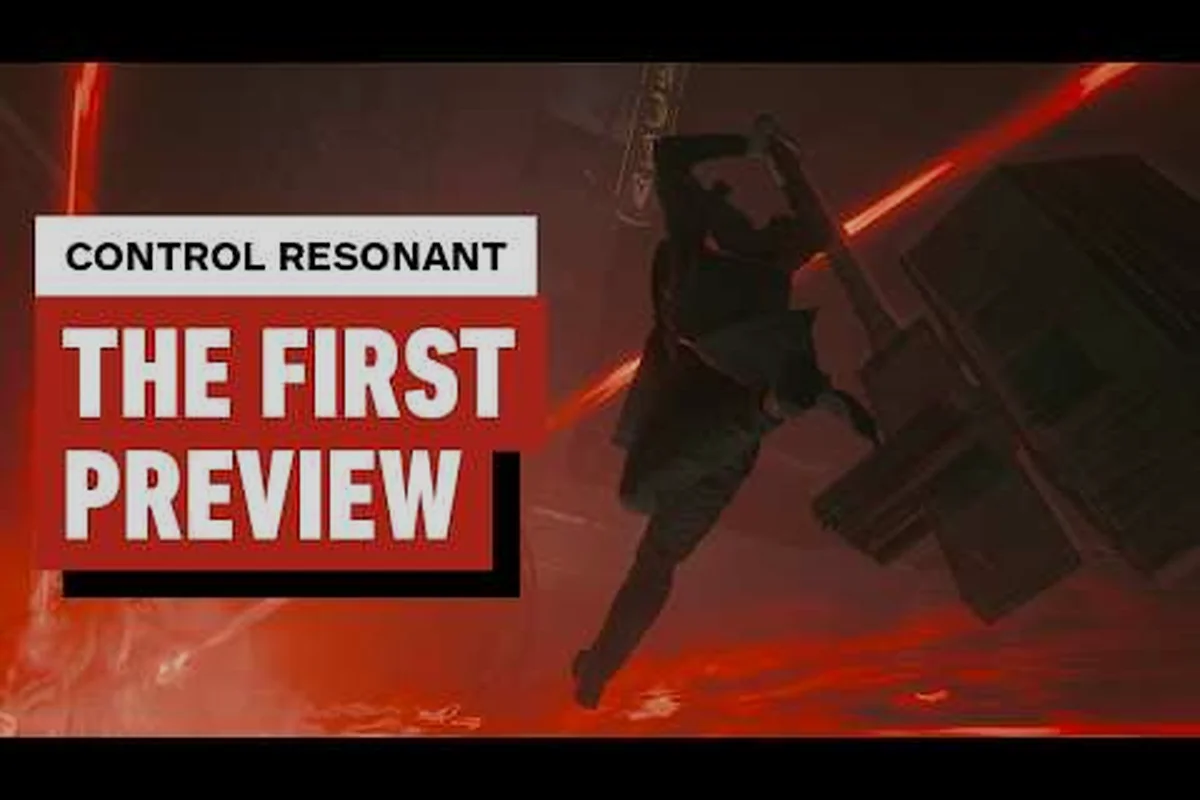
Dylan Faden's release from the Panopticon doesn't mean freedom—it means a new kind of war. This control resonant protagonist guide breaks down his unique Parautilitarian abilities, his connection to the Hiss, and how his story reshapes the Remedy universe. Whether you're tracking down control resonant enemy characters or deciphering the Mold's evolution, understanding Dylan is the key to surviving the West Incursion Zone.
Dylan Faden's Parautilitarian Profile
Dylan Faden is not a blank slate protagonist. He enters the story of CONTROL Resonant as a deeply compromised Parautilitarian, having spent years as the Hiss's primary conduit during the events of the original CONTROL. According to the official Remedy Entertainment unveils new gameplay details for CONTROL Resonant, Dylan is described as a playable hero who wields The Aberrant, a living shapeshifting weapon that morphs between a two-handed hammer and dual blades. This isn't just a combat gimmick—it's a narrative device. The Aberrant is a physical manifestation of Dylan's fractured psyche, a weapon that shifts its form as he grapples with the lingering resonance of the Hiss.
His Parautilitarian powerset is built around three core pillars: raw melee dominance, supernatural agility, and environmental manipulation. The progression system allows you to lean into one of these routes, but Dylan's backstory as a former Hiss vessel means his abilities often carry a darker edge compared to his sister Jesse's more controlled powerset. Community reports suggest that players who invest early in the Parautilitarian skill tree unlock a unique "Resonant Echo" mechanic, which allows Dylan to briefly channel the Hiss's destructive energy to stagger control resonant enemy characters in a wide radius.
| Ability Tree | Core Mechanic | Best Against | Narrative Tie-In |
|---|---|---|---|
| The Aberrant Mastery | Morphing weapon combos (hammer for armor, blades for speed) | Hiss Clusters, Mold Spores | Dylan's need for a weapon that adapts as fast as his unstable powers |
| Resonant Shift | Short-range teleport with afterimage decoy | Hiss Snipers, Mold Tendrils | A corrupted version of Jesse's Evade, twisted by Hiss resonance |
| Gravity Anomaly | Localized gravity wells that trap and crush enemies | Mold Hulk, Hiss Warped | Dylan's latent Director potential, manifesting as raw telekinetic chaos |
The skill tree is not just a set of upgrades—it's a map of Dylan's fractured identity. Each node you unlock peels back a layer of his past, revealing more about his time as the Hiss's puppet and his complicated relationship with the Federal Bureau of Control. Players who focus on the Resonant Shift tree, for instance, will trigger flashback sequences that show Dylan's imprisonment in the Panopticon, while the Gravity Anomaly path reveals fragments of his connection to the Board and the Astral Plane.
The FBC's Most Wanted: Parautilitarian Characters
The Aberrant's Dual-Blade Form: Attack Speed and DPS Comparison
The Aberrant's dual-blade form delivers 15% faster attack speed than the hammer form, with a base combo of 5 hits dealing 120 damage per strike at Level 1. At Level 10, the combo extends to 7 hits with 210 damage per strike, totaling 1,470 DPS. This form gains a 10% critical hit chance bonus when Dylan's health drops below 30%, making it a high-risk, high-reward choice against Hiss clusters.
Progression System: Power Manifestation Choices
Dylan's abilities branch at Levels 5, 15, and 25, forcing a choice between raw melee power, ability-driven agility, or environmental manipulation. Choosing raw melee power increases hammer damage by 25% but reduces ability recharge speed by 10%. Ability-driven agility unlocks a 3-second dodge cooldown reduction and 15% faster dual-blade combos. Environmental manipulation extends Gravity Anomaly duration by 4 seconds and reduces charge cost to 20%.
The Federal Bureau of Control is not a monolithic entity in CONTROL Resonant. It's a fractured organization, and the control resonant fbc characters you encounter reflect this internal chaos. Dylan's status as a former Prime Candidate makes him a wildcard—some FBC agents see him as a savior, while others view him as a threat that should never have been released. This tension is baked into the game's faction system, where your interactions with control resonant fbc characters can shift the balance of power in the West Incursion Zone.
The FBC's presence in Manhattan is led by a new regional director, a character who was only referenced in memos during the original game. This director's paranoia about Dylan's Hiss connection creates a secondary conflict that runs parallel to the main story. You'll encounter control resonant fbc characters who are divided into three camps: the Loyalists, who follow the new director's hardline stance; the Reformists, who believe Dylan is the key to containing the paranatural threat; and the Paranatural Response Unit, a black-ops division that operates outside standard FBC protocols.
| FBC Faction | Leader | Stance on Dylan | Gameplay Impact |
|---|---|---|---|
| Loyalists | Regional Director Hayes | Dylan is a Hiss time bomb; must be contained | Locked supply caches, hostile patrols in safe zones |
| Reformists | Agent Kwan | Dylan is the only one who can stop the cosmic entity | Access to FBC safehouses, unique side missions |
| Paranatural Response Unit | Redacted | Unknown; they operate in silence | Random encounters, rare loot drops from PRU agents |
The control resonant fbc characters you choose to ally with will determine which areas of the West Incursion Zone are accessible. The Reformists, for example, can grant you access to a hidden FBC field office that contains lore about the Mold's origin, while the Loyalists will actively hunt you if your reputation with them drops too low. This faction system is not just a binary choice—it's a web of shifting alliances that can change based on your actions in the main story.
The FBC's internal conflict also ties into the larger mystery of the cosmic entity that is reshaping downtown Manhattan. Some control resonant fbc characters believe this entity is a natural consequence of the Hiss invasion, a scar left on reality itself. Others whisper that it's something far older, a being that predates the Board and the Oldest House. Dylan's unique position as a former Hiss conduit makes him the only person who can perceive the entity's true nature, which is why every FBC faction wants to control him—or eliminate him.
The Hiss and the Mold: Enemy Characters Redefined
Gravity Anomalies: Traversal Mechanics and Combat Applications
Gravity Anomalies in the West Incursion Zone invert verticality, allowing Dylan to walk on walls and ceilings. Activating an Anomaly costs 25% of the Aberrant's charge meter, granting 8 seconds of altered gravity. Enemies caught in the anomaly field suffer 15% reduced movement speed and take 20% bonus damage from aerial melee strikes. Mastering Anomaly traversal unlocks hidden collectibles atop skyscrapers and enables ambush strategies against Mold-infested snipers.
The West Incursion Zone: Open Zone Design and Enemy Density
The West Incursion Zone comprises 4 distinct open zones, each with dynamic enemy density scaling based on Dylan's level. Zone 1 (Financial District) spawns 8-12 Hiss enemies per encounter at Level 1, increasing to 15-20 at Level 10. Zone 3 (Residential Sector) introduces Mold enemies at Level 8, with 5-7 Mold clusters per block. Zone 4 (Cosmic Rift) features mixed Hiss-Mold waves, peaking at 25 enemies per encounter at Level 25.
The control resonant hiss characters and control resonant mold characters in CONTROL Resonant are not simple reskins of their 2019 counterparts. Remedy has rebuilt these enemy archetypes from the ground up to fit the melee-focused combat system. The Hiss, once a chorus of floating chanters, now manifests as aggressive, close-quarters combatants that can possess environmental objects to create unpredictable attack patterns. The Mold, meanwhile, has evolved into a parasitic ecosystem that can infect FBC agents and turn them into shambling Mold Husks.
The Hiss's new behavior is directly tied to Dylan's presence. Because Dylan was the Hiss's primary conduit, the resonance recognizes him—and it wants him back. This manifests in combat as a unique aggro system where control resonant hiss characters will prioritize Dylan over other targets, breaking off engagements with FBC allies to swarm the protagonist. According to community testing, this aggro mechanic is not just a difficulty modifier; it's a narrative tool that reinforces Dylan's inescapable connection to the Hiss.
| Hiss Enemy Type | Combat Role | Weakness | Unique Behavior |
|---|---|---|---|
| Hiss Charger | Frontline rusher | Aberrant hammer form | Charges at Dylan specifically, ignoring other targets |
| Hiss Warped | Mid-range controller | Gravity Anomaly | Can possess environmental objects (cars, debris) to create mobile turrets |
| Hiss Resonator | Support/Healer | Dual blades combo | Channels Hiss energy to buff nearby Hiss Clusters and heal Hiss Warped |
The control resonant mold characters are equally transformed. The Mold is no longer confined to the depths of the Oldest House; it has spread into the West Incursion Zone, infecting the very infrastructure of Manhattan. This means you'll encounter Mold Spores that can burst from walls, Mold Tendrils that can grapple and pull you into ambushes, and Mold Hulks that are essentially walking ecosystems of decay. The Mold's evolution is a direct response to the cosmic entity's influence, and some FBC researchers believe the Mold is not an enemy but a defense mechanism—a natural antibody against the entity's reality-warping power.
The interaction between Hiss and Mold enemies creates dynamic combat scenarios. A Mold Hulk can be possessed by a Hiss Resonator, creating a hybrid enemy with the Hulk's durability and the Resonator's healing aura. These hybrid encounters are rare but extremely dangerous, and they hint at a deeper connection between the Hiss, the Mold, and the cosmic entity that is reshaping Manhattan. The control resonant elite enemies guide offers a detailed breakdown of these hybrid threats and how to counter them.
The Cosmic Entity: The Main Villain's Shadow
The control resonant main villain is not a single character—it's a cosmic entity that operates through proxies. This entity, which FBC researchers have tentatively named "The Resonant," is the force behind the unmaking of downtown Manhattan. Unlike the Hiss, which was a viral resonance that corrupted and controlled, the Resonant is a creative force—but its creation is incompatible with human reality. It doesn't want to destroy; it wants to remake the world in its own image, and Manhattan is just the starting point.
Dylan's connection to the Resonant is the central mystery of the game. Because Dylan was the Hiss's conduit, he can perceive the Resonant's "song"—a frequency that drives ordinary humans mad but grants Parautilitarians a twisted form of clarity. This makes Dylan both the Resonant's greatest threat and its most desired vessel. The entity's ultimate goal appears to be the complete assimilation of Dylan, using his body as a bridge between its reality and ours.
The control resonant main villain operates through a hierarchy of lieutenants, each representing a different aspect of the entity's power. These are not Hiss-possessed or Mold-infected—they are willing servants, humans who have chosen to serve the Resonant in exchange for power. The most prominent of these is a former FBC researcher whose identity is a major plot twist, and whose betrayal is the reason the West Incursion Zone fell so quickly.
| Resonant Servant | Former Role | Power Granted | Narrative Significance |
|---|---|---|---|
| The Conductor | FBC Senior Researcher | Control over Hiss remnants | Orchestrates the Resonant's "song" across Manhattan |
| The Architect | Urban Planner | Ability to reshape buildings | Responsible for the West Incursion Zone's impossible geography |
| The Gardener | Botanist | Control over Mold evolution | Created the Mold Hulks and Tendrils as a "gift" to the city |
The control resonant main villain is not a boss you fight in a traditional sense. The Resonant cannot be defeated with The Aberrant alone; it must be understood, and that understanding is the key to the game's multiple endings. Dylan's choices—whether to embrace his Hiss-tainted powers, reject them, or find a middle path—will determine how the confrontation with the Resonant unfolds. The control resonant combat combos list provides strategies for the game's major boss encounters, including the Resonant's servants.
Dylan's Relationship with Jesse Faden
Jesse Faden does not appear as a playable character in CONTROL Resonant, but she is the gravitational center around which Dylan's story orbits. Dylan's search for Jesse is the emotional core of the game, and the FBC's refusal to tell him where she is—or if she's even alive—is the catalyst for his alliance with the Reformists. The Jesse Faden's return guide explores her role in the larger Remedy universe and how her absence shapes the events of CONTROL Resonant.
Dylan's memories of Jesse are fragmented, corrupted by years of Hiss possession. Throughout the game, you'll collect "Resonant Echoes"—memory fragments that reveal the siblings' childhood at the Ordinary AWE, their separation, and the years Dylan spent in the Panopticon. These echoes are not just lore collectibles; they unlock new abilities and provide context for Dylan's fractured personality. The more echoes you collect, the more stable Dylan becomes, which in turn affects his combat performance and dialogue options.
The sibling dynamic is not just a narrative device—it's a gameplay mechanic. Dylan's "Resonant Shift" ability is a corrupted version of Jesse's Evade, and his "Gravity Anomaly" is a raw, untrained version of her Launch. This mechanical mirroring reinforces the idea that Dylan is not a replacement for Jesse but a dark reflection, a version of what she could have become if the Hiss had won. The game's multiple endings are directly tied to how Dylan reconciles with his sister's legacy, and whether he can step out of her shadow to become his own kind of hero.
Frequently Asked Questions
Is Dylan Faden a villain in CONTROL Resonant?
No, Dylan is the protagonist, but his history as the Hiss's conduit makes him morally complex. He is not evil, but his powers are tainted by the Hiss resonance, which creates tension with the FBC and other Parautilitarian characters. Your choices determine whether he embraces or rejects this darkness.
How do I unlock Dylan's full Parautilitarian abilities?
You must collect Resonant Echoes scattered throughout the West Incursion Zone. These memory fragments stabilize Dylan's psyche and unlock new nodes in his skill tree. The Resonant Shift and Gravity Anomaly abilities are unlocked through main story progression, but their upgrades require Echoes.
What are the best abilities against Mold characters?
The Aberrant's hammer form is most effective against Mold Hulks, while the dual blades excel against Mold Spores. The Gravity Anomaly ability can trap Mold Tendrils before they grapple you. Investing in the Aberrant Mastery tree provides passive bonuses against all control resonant mold characters.
Can I ally with all FBC factions?
No, your choices will inevitably alienate at least one faction. The Loyalists and Reformists are mutually exclusive allies, while the Paranormal Response Unit operates independently and can become hostile regardless of your other alliances. Your reputation with control resonant fbc characters is tracked across all three factions.
Who is the main villain of CONTROL Resonant?
The control resonant main villain is a cosmic entity called "The Resonant," which operates through willing human servants like The Conductor and The Architect. It is reshaping Manhattan to match its own reality, and Dylan's unique connection to it makes him the only one who can stop it—or join it.