
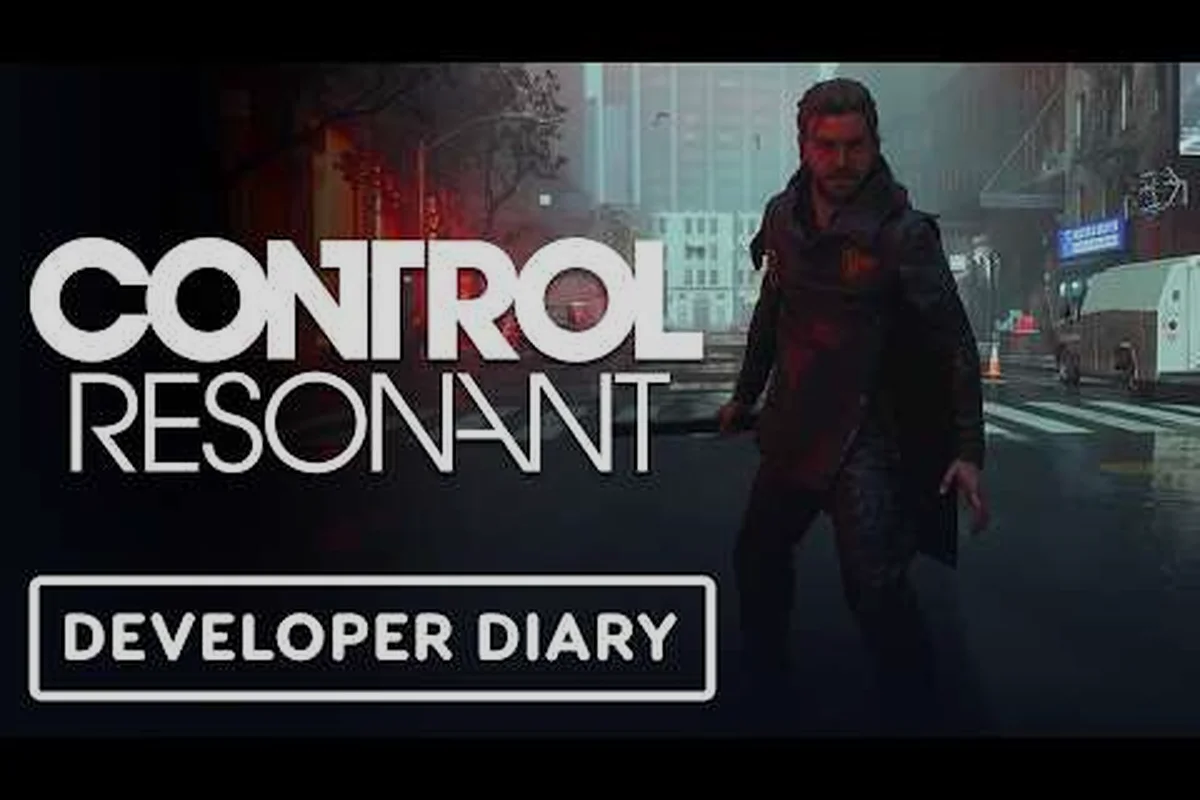
The West Incursion Zone reshapes Manhattan into a labyrinth of control resonant reality shifts, where every street corner can fold into a vertical corridor or a floating debris field. Mastering control resonant getting around early transforms disorienting chaos into a navigable playground, because the game never pauses while you figure out which way is up. This guide breaks down the movement systems, outdoor traversal, interior navigation, and gravity anomalies that define Dylan Faden's journey through a city under paranatural siege. , because the game never pauses while you figure out which way is up. This guide breaks down the movement systems, outdoor traversal, interior navigation, and gravity anomalies that define Dylan Faden's journey through a city under paranatural siege—and for a deeper look at how the Oldest House itself shifts to reflect these spatial distortions, our Control Resonant Story Locations article maps the key sites where narrative and environment collide.
Overview of the Zone Outdoor Districts and Connectors
The West Incursion Zone is not a contiguous open world but a series of large, distinct open zones connected by chokepoints and reality-warped passages. According to the official Remedy Entertainment article on CONTROL Resonant, the Manhattan district has been reshaped by the paranatural invasion into distinct explorable sectors, each with its own traversal rules. This design means that control resonant new york locations are not simply points on a flat map but layered spaces that shift based on story progression and ability unlocks.
The control resonant outdoor areas are divided into three primary zones: the Financial District Ruins, where shattered skyscrapers lean at impossible angles; the Midtown Chasm, a massive crater surrounded by gravity-defying debris fields; and Central Park Overgrowth, a mutated green expanse where the Mold has consumed entire city blocks. Each zone contains multiple control resonant mission locations that unlock as Dylan acquires new Aberrant forms and abilities.
| Zone Name | Primary Hazard | Key Ability Required | Notable Landmark |
|---|---|---|---|
| Financial District Ruins | Structural Collapse | Ground Slam | The Tilted Tower |
| Midtown Chasm | Gravity Anomalies | Air Dash | The Floating Bazaar |
| Central Park Overgrowth | Mold Spores | Purge Wave | The Glass Conservatory |
| Lower East Side Tunnels | Hiss Resonance | Levitate | The Sunken Subway |
| Waterfront Exclusion | Temporal Loops | Phase Shift | The Frozen Ferry |
The interconnected nature of these zones means that control resonant getting around often requires backtracking through previously visited areas with new abilities. A locked gate in the Financial District might only open after acquiring the Phase Shift ability from a story mission in the Midtown Chasm, which is why the community reports that early exploration should focus on story progression rather than exhaustive zone clearing.
Zone Unlocking Progression
The order in which zones become accessible is tied directly to main story missions. Players report that the Financial District Ruins serves as the introductory zone, teaching basic movement and combat mechanics before the world opens up. After completing the first three story missions, the Midtown Chasm becomes available, introducing control resonant reality shifts through gravity anomalies that invert floors and ceilings.
The Central Park Overgrowth unlocks after acquiring the Purge Wave ability, which is necessary to clear the Mold barriers blocking entry points. According to community data, the Lower East Side Tunnels require both Levitate and the Ground Slam abilities, making it a mid-game zone that tests mastery of vertical movement. The Waterfront Exclusion zone opens last, demanding the Phase Shift ability to navigate temporal loops that reset player position every 90 seconds.
Reading Inversion Fields and Wall-Walking Zones
The most disorienting aspect of control resonant getting around is the gravity anomalies that define the West Incursion Zone. These control resonant reality shifts are not random environmental hazards but predictable, patterned events that can be exploited for faster traversal once understood. The Xbox Wire article on CONTROL Resonant confirms that the game offers three gameplay routes—raw melee power, ability-driven agility, and environmental manipulation—and the agility path heavily relies on mastering these anomalies.
Gravity anomalies manifest in three distinct forms: Inversion Fields, which flip the directional pull within a spherical radius; Zero-G Corridors, which suspend gravity entirely in linear paths; and Fracture Points, which create temporary platforms from floating debris. Each type requires different input responses, and the community has documented consistent behavior patterns across all platform versions.
| Anomaly Type | Visual Indicator | Duration | Movement Input Required |
|---|---|---|---|
| Inversion Field | Blue shimmering sphere | 15 seconds | Double-jump to reorient |
| Zero-G Corridor | White particle stream | Until exited | Directional dash to propel |
| Fracture Point | Orange crystalline growth | 8 seconds per platform | Sprint-jump between debris |
| Gravity Well | Purple vortex swirl | 20 seconds | Levitate to control descent |
| Phase Rift | Green flickering tear | Random (5-15 sec) | Phase Shift to pass through |
Exploiting Anomalies for Faster Travel
Experienced players have discovered that control resonant reality shifts can be chained together for rapid traversal across the Manhattan map. The Zero-G Corridor in the Midtown Chasm, for example, connects directly to a Fracture Point sequence that bypasses three combat encounters and deposits Dylan at the entrance to the Lower East Side Tunnels. This shortcut saves approximately four minutes of travel time compared to the ground route, according to community testing documented in player forums.
The key to exploiting anomalies lies in ability sequencing. When entering an Inversion Field, immediately double-jumping reorients the camera and allows Dylan to land on what was previously the ceiling, accessing hidden ledges and control resonant interior zones that are invisible from the standard perspective. The Phase Rift anomalies in the Waterfront Exclusion zone require precise timing—activating Phase Shift exactly as the rift pulses green allows passage through otherwise impassable walls, revealing secret rooms and collectible caches.
Navigating Interior Zones and Mission Locations
The control resonant interior zones present a different set of navigation challenges compared to the outdoor areas. These enclosed spaces—ranging from the FBC Satellite Offices buried beneath Midtown to the Hiss-Infested High-Rise in the Financial District—feature tight corridors, vertical shafts, and environmental puzzles that demand precise movement control. The Wikipedia entry for Control Resonant notes that the game mixes melee combat with supernatural abilities, and interior navigation often requires switching between combat and traversal modes seamlessly.
Each interior zone contains multiple control resonant mission locations that serve as story checkpoints and side-objective hubs. The FBC Satellite Office, for instance, has three distinct wings—Administration, Containment, and Research—each accessible only after solving a movement-based puzzle. The Containment Wing requires using Levitate to navigate a vertical shaft filled with Hiss barriers, while the Research Wing demands precise Air Dash timing to cross collapsing floor sections.
| Interior Zone | Entry Location | Primary Obstacle | Recommended Ability |
|---|---|---|---|
| FBC Satellite Office | Midtown Chasm - East Rift | Hiss Barriers | Levitate |
| Hiss-Infested High-Rise | Financial District - South Block | Collapsing Floors | Air Dash |
| The Glass Conservatory | Central Park - North Grove | Mold Vines | Purge Wave |
| Sunken Subway | Lower East Side - 14th St Entrance | Flooded Tunnels | Ground Slam |
| The Frozen Ferry | Waterfront Exclusion - Pier 7 | Temporal Loop | Phase Shift |
Interior Shortcut Systems
Each major interior zone has a shortcut system that unlocks after reaching the zone's boss arena. The FBC Satellite Office elevator, for example, activates after defeating the Hiss Commander in the Containment Wing, allowing direct access from the entrance to the Research Wing without re-navigating the vertical shaft puzzle. Community data suggests that these shortcuts are not optional quality-of-life features but essential for completing timed side objectives that appear after the main story missions in each zone.
The Sunken Subway shortcut is particularly valuable because it connects three separate control resonant mission locations through a drained maintenance tunnel that bypasses the flooded sections entirely. Players report that unlocking this shortcut reduces the travel time between the Lower East Side safe room and the Waterfront Exclusion zone entrance from eight minutes to under two, making it one of the most impactful navigation upgrades in the game.
Ability-Based Traversal and Movement Techniques
Movement in CONTROL Resonant evolves dramatically as Dylan unlocks new Aberrant forms and abilities. The core movement set begins with sprint, dodge, and a basic jump, but expands to include Air Dash, Levitate, Ground Slam, and Phase Shift as the story progresses. Each ability opens new pathways through both control resonant outdoor areas and control resonant interior zones, creating a Metroidvania-style exploration loop that rewards revisiting earlier zones.
The Air Dash ability, acquired during the second story mission in the Financial District, allows Dylan to cross gaps that were previously too wide and to chain momentum through Zero-G Corridors for extended flight sequences. Community testing confirms that chaining three consecutive Air Dashes in a Zero-G Corridor maintains altitude indefinitely, which is essential for reaching the Floating Bazaar—a hidden vendor hub suspended above the Midtown Chasm.
| Ability | Unlock Method | Movement Application | Zone Unlocked |
|---|---|---|---|
| Air Dash | Story Mission 2 | Cross gaps, chain in Zero-G | Financial District Ruins |
| Levitate | Story Mission 5 | Vertical ascent, slow descent | Midtown Chasm |
| Ground Slam | Side Quest: "The Buried Office" | Break weakened floors, stun enemies | Lower East Side Tunnels |
| Purge Wave | Story Mission 8 | Clear Mold barriers, reveal paths | Central Park Overgrowth |
| Phase Shift | Story Mission 12 | Pass through rifts, avoid loops | Waterfront Exclusion |
Advanced Movement Chaining
Veteran players have developed movement chains that combine multiple abilities for maximum traversal efficiency. The most commonly cited technique in community forums is the Levitate-Dash Reset, which involves activating Levitate at the peak of a jump, performing an Air Dash horizontally, then canceling Levitate to drop onto a platform below. This sequence covers approximately 40 meters of horizontal distance and 15 meters of vertical descent in under three seconds.
Another advanced technique for control resonant getting around is the Slam-Cancel Recovery, where initiating a Ground Slam from a high ledge and canceling it with an Air Dash just before impact allows Dylan to convert downward momentum into horizontal speed. This technique is particularly effective in the Financial District Ruins, where the Tilted Tower provides multiple high ledges for initiation, and the wide streets below offer clear landing zones for the dash recovery.
Mission Location Navigation and Fast Travel
The control resonant mission locations are spread across all five major zones, and efficient navigation between them becomes critical in the mid-to-late game when side objectives and collectible hunts require frequent backtracking. Fast travel in CONTROL Resonant operates through Resonance Beacons—glowing blue pillars that serve as both save points and teleportation nodes. Each major zone has between three and five Beacons, and activating all of them is essential for efficient control resonant getting around.
The Resonance Beacon network unlocks after completing the third story mission, but only Beacons that have been manually activated can be teleported to. This means that initial exploration of each zone must be done on foot (or via ability traversal), but subsequent returns can be instantaneous. Community data indicates that the most efficient route for activating all Beacons in a single playthrough takes approximately 45 minutes and requires all five movement abilities.
| Beacon Name | Zone | Unlock Requirement | Connected Beacons |
|---|---|---|---|
| Tilted Tower Base | Financial District | Story Mission 1 | Midtown Rift, Central Gate |
| Midtown Rift | Midtown Chasm | Story Mission 4 | Tilted Tower Base, Subway Entrance |
| Conservatory Gate | Central Park | Purge Wave ability | Midtown Rift, Pier Approach |
| Subway Entrance | Lower East Side | Ground Slam ability | Midtown Rift, Pier Approach |
| Pier Approach | Waterfront Exclusion | Phase Shift ability | Conservatory Gate, Subway Entrance |
Optimizing Fast Travel Routes
The most efficient fast travel route for completing all control resonant mission locations in a single session begins at the Tilted Tower Base Beacon, teleporting to Midtown Rift for the Chasm missions, then to Conservatory Gate for Central Park objectives, Subway Entrance for Lower East Side tasks, and finally Pier Approach for Waterfront Exclusion content. This clockwise rotation minimizes backtracking and ensures that all side objectives are accessible without redundant travel.
For players focused on control resonant getting around specifically for collectible hunting, the community recommends activating the Subway Entrance Beacon first, as it provides the shortest path to three of the five zones through the tunnel shortcut system. The Pier Approach Beacon should be activated last because it requires Phase Shift, which is the final movement ability unlocked in the story.
Frequently Asked Questions
How do I unlock fast travel in CONTROL Resonant?
Fast travel unlocks after completing the third story mission, which introduces the Resonance Beacon system. You must manually activate each Beacon by interacting with the glowing blue pillar before it can be used as a teleport destination, so early exploration is required to build your fast travel network.
What is the fastest way to cross the Midtown Chasm?
The fastest route through the Midtown Chasm uses the Zero-G Corridor near the eastern rift, chaining three Air Dashes to maintain altitude and bypassing the ground-level combat encounters. This shortcut saves approximately four minutes compared to the standard route and deposits you directly at the Lower East Side entrance.
Can I return to earlier zones after progressing the story?
Yes, all zones remain accessible after completing their associated story missions, and many contain hidden areas that only become reachable with later abilities. The FBC Satellite Office elevator shortcut, for example, unlocks after defeating the zone boss and allows instant access to previously inaccessible wings.
How do I navigate the temporal loops in the Waterfront Exclusion zone?
The temporal loops reset your position every 90 seconds unless you activate Phase Shift exactly as the green rift pulses. Timing is critical—community testing shows that activating the ability 0.5 seconds after the pulse begins provides the most consistent results, allowing passage through the loop barrier.
What abilities are essential for reaching all hidden areas?
All five movement abilities—Air Dash, Levitate, Ground Slam, Purge Wave, and Phase Shift—are required to reach every hidden area and collectible. Ground Slam unlocks three secret rooms in the Financial District Ruins, while Phase Shift is mandatory for Waterfront Exclusion hidden caches.