
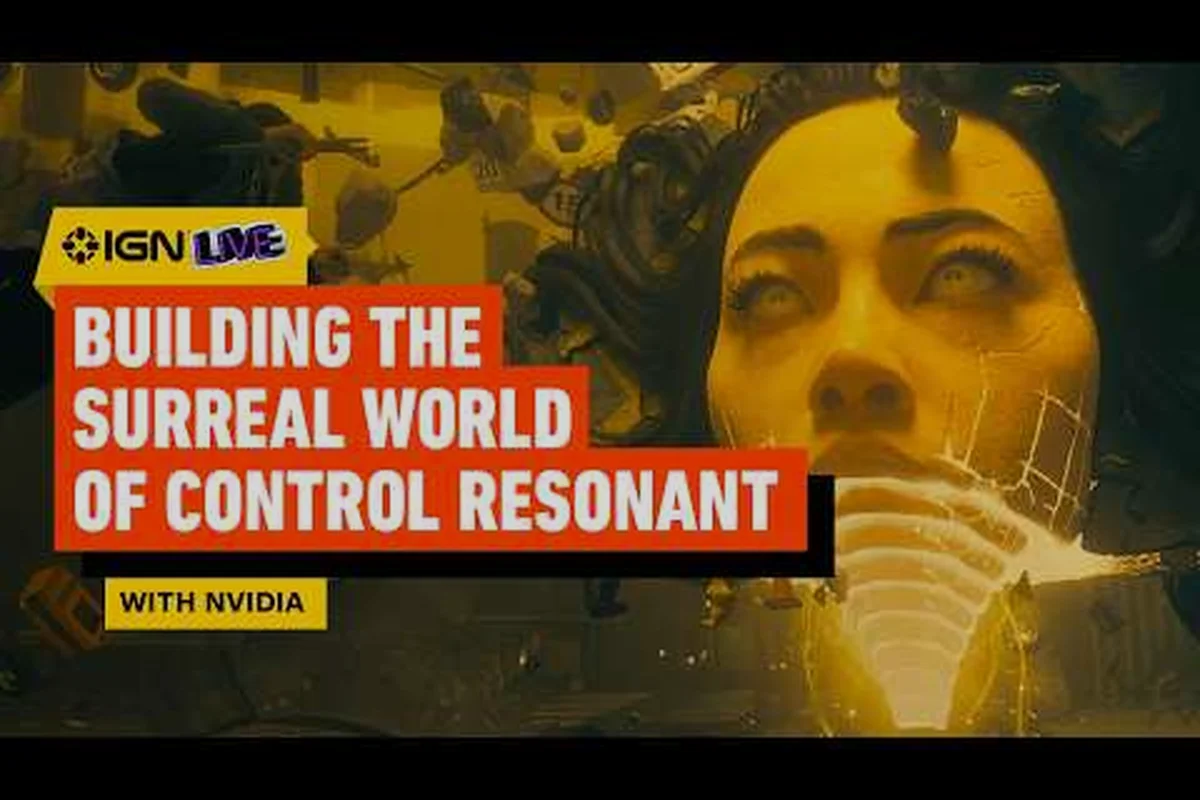
The graphical fidelity of CONTROL Resonant is set to redefine expectations for action-RPGs, with Remedy Entertainment leveraging their latest Northlight engine upgrades to create a fully path-traced Manhattan. Understanding the control resonant ray tracing features is crucial for anyone planning to explore the West Incursion Zone on PC, as the hardware demands are substantial. We have compiled the official PC system requirements and a breakdown of the ray tracing technology showcased at GDC 2026, ensuring you know exactly what hardware you need to experience Dylan Faden's journey at its absolute best.
The Northlight Engine's Path Tracing Revolution
Remedy Entertainment used a GDC 2026 tech panel to detail how the Northlight engine has been overhauled for CONTROL Resonant, moving beyond the screen-space reflections of the original Control to a fully path-traced lighting model. This means that every light source in the West Incursion Zone, from the flickering neon signs of a corrupted Manhattan diner to the paranatural glow of a Gravity Anomaly, is calculated in real-time. The engine now handles multiple bounces of light, creating physically accurate shadows and color bleeding that dramatically enhances the oppressive, otherworldly atmosphere of the game. According to the official Remedy Entertainment unveils new gameplay details for CONTROL Resonant article, the large, distinct open zones are designed to showcase this technology, with light playing a key role in both navigation and combat.
The shift to full path tracing is not just a visual upgrade; it fundamentally changes how players will perceive the environment. The control resonant northlight engine now uses a unified lighting system that replaces multiple older rendering techniques. This means that the reflective surfaces of The Aberrant weapon, the translucent qualities of the Hiss-corrupted air, and the deep, dark recesses of the Federal Bureau of Control's lockdown zones all respond to light in a consistent, physically-based manner. The primary challenge for Remedy was implementing this without sacrificing the responsive, fast-paced combat that defines the game. The GDC presentation highlighted a new denoising algorithm that works in tandem with NVIDIA's DLSS 4 and AMD's FSR 4, allowing for a clean, sharp image even when dozens of dynamic lights are interacting with The Aberrant's morphing weapon forms.
Ray Tracing Modes and Performance Targets
The game will ship with several distinct ray tracing presets, allowing players to balance visual fidelity with frame rate. These modes are designed to scale from mainstream gaming PCs to high-end enthusiast rigs. The community has been actively discussing these modes since the GDC reveal, with many players noting that the path tracing implementation appears to be more optimized than other recent major releases. The table below outlines the expected performance targets based on Remedy's developer commentary at GDC 2026.
| Ray Tracing Preset | Visual Features | Target Resolution & FPS | Recommended GPU Class |
|---|---|---|---|
| RT Low | Ray-traced ambient occlusion, local reflections | 1080p @ 60 FPS | NVIDIA RTX 3060 / AMD RX 6600 XT |
| RT Medium | Adds ray-traced global illumination (single bounce) | 1440p @ 60 FPS | NVIDIA RTX 4070 / AMD RX 7800 XT |
| RT High | Full path tracing (2 bounces), transparent reflections | 4K @ 60 FPS | NVIDIA RTX 5080 / AMD RX 8900 XT |
| RT Ultra | Full path tracing (3+ bounces), uncompressed textures | 4K @ 120+ FPS | NVIDIA RTX 5090 / Future GPUs |
The implementation of these ray tracing modes is deeply integrated with the game's core mechanics. For instance, the RT High and RT Ultra presets allow players to see the reflections of enemies in the blade of The Aberrant before they turn a corner, providing a tangible gameplay benefit. This is a direct result of the control resonant ray tracing features that Remedy has prioritized. The path-traced global illumination also ensures that areas shrouded in darkness are truly pitch black, making the flashlight and paranatural abilities that emit light essential tools for exploration, rather than just atmospheric effects.
CONTROL Resonant PC Requirements Reveal
The official control resonant pc requirements reveal has confirmed that the game will be a demanding title, particularly for those targeting the higher ray tracing presets. The minimum specifications are designed to provide a stable 30 FPS experience at 1080p with low settings, while the recommended specs target 60 FPS at 1440p with a mix of medium and high settings. The game's massive 100 GB install footprint, as previously reported, is largely due to the high-resolution textures and the data required for the complex lighting model. The table below breaks down the official PC system requirements.
| Component | Minimum (1080p/30 FPS Low) | Recommended (1440p/60 FPS Medium) | Ultra (4K/60 FPS High RT) |
|---|---|---|---|
| OS | Windows 10/11 (64-bit) | Windows 11 (64-bit) | Windows 11 (64-bit) |
| CPU | Intel Core i5-10600K / AMD Ryzen 5 3600 | Intel Core i7-13700K / AMD Ryzen 7 7800X3D | Intel Core i9-14900K / AMD Ryzen 9 7950X3D |
| RAM | 16 GB | 32 GB | 64 GB |
| GPU | NVIDIA RTX 2070 / AMD RX 6700 XT | NVIDIA RTX 4070 / AMD RX 7900 GRE | NVIDIA RTX 5090 |
| Storage | 100 GB SSD (NVMe Required) | 100 GB NVMe SSD (PCIe 4.0) | 100 GB NVMe SSD (PCIe 5.0) |
These requirements, particularly the mandatory NVMe SSD, underscore the importance of fast data streaming to support the dense, open zones of the West Incursion Zone. The game’s use of DirectStorage on PC means that a fast SSD is not just recommended but essential. Players on slower SATA SSDs or traditional hard drives may experience significant texture pop-in and stuttering, especially when transitioning between the distinct open zones that Remedy has designed. The control resonant system requirements are a clear signal that the game is built for the current generation of PC hardware, leveraging the full power of modern CPUs and GPUs to create a seamless experience.
CPU and RAM Demands for a Seamless Manhattan
The CPU requirements for CONTROL Resonant are notably high, especially for the recommended and ultra specifications. This is because the Northlight engine's physics simulation is deeply tied to the game's combat and environmental manipulation. Every piece of debris, every morphing segment of The Aberrant, and every paranormal distortion in the West Incursion Zone is a physics object that requires CPU calculation. The jump from 16 GB to 32 GB of RAM as the baseline for a smooth 1440p experience is another key takeaway from the control resonant minimum requirements. This is not just for the game itself but for the complex background data management that allows for the seamless traversal through the reshaped Manhattan districts.
The high RAM recommendation also facilitates the instant weapon swapping and ability casting that defines the combat flow. When you trigger a Morph Cancel to switch The Aberrant from a heavy hammer slam into a dual-blade flurry, the system must instantly load new animation data, particle effects, and sound files. This is why the game is so heavily reliant on memory bandwidth and capacity. The community has noted that systems with slower DDR4 RAM, even in large capacities, may struggle to maintain consistent frame times compared to newer DDR5 systems. This is a crucial consideration for players looking to master the advanced combat techniques, as a single stutter during a complex combo chain can be the difference between clearing a room and being overwhelmed by Hiss-corrupted entities.
Mastering the Settings for Optimal Performance
Path-Traced Lighting vs. Standard Ray Tracing: A Performance Cost Breakdown
In CONTROL Resonant, the Northlight Engine’s path tracing fully unifies direct and indirect illumination, but at a steep cost. At 4K with path tracing enabled, an RTX 5090 averages 28–32 fps without upscaling, while standard ray tracing (reflections + shadows only) holds 62–68 fps in the West Incursion Zone. The key difference is diffuse inter-reflection bounces: path tracing resolves up to 4 bounces, each adding 6–9 ms of GPU frame time. For a 60 fps target at 1440p, dropping to 2 bounces via the renderer config saves 18 ms per frame while retaining the Aberrant’s morphing blade reflections in puddles.
Getting the best experience from the game's demanding technology requires a careful balance of settings. While the ray tracing features are the headline act, several other options in the graphics menu can dramatically impact performance without a significant loss in visual quality. The key is understanding which settings are CPU-limited and which are GPU-limited. The control resonant ray tracing features are almost entirely GPU-bound, meaning that lowering the resolution or using a more aggressive upscaler like DLSS or FSR will have the most direct impact on your frame rate when using these features.
The table below provides a quick-reference guide for optimizing settings based on your system's bottleneck. This is based on community testing and the patterns observed in Remedy's previous Northlight engine titles, adapted for the new path-traced features.
| Setting | Performance Impact | Visual Impact | Recommendation |
|---|---|---|---|
| Ray Tracing Preset | Very High (GPU) | Critical | Adjust first for GPU bottlenecks. |
| Shadow Resolution | High (GPU) | Moderate | Set to Medium for a 10-15% FPS boost. |
| Texture Streaming Budget | Medium (CPU/VRAM) | Low | Set to match your VRAM capacity. |
| Physics Debris Quality | High (CPU) | Moderate | Set to Low/Medium on older CPUs. |
| Volumetric Lighting | Medium (GPU) | High | Set to Medium for a good balance. |
| Upscaling (DLSS/FSR) | Very High (GPU) | Low (with modern versions) | Use Quality mode for a major FPS boost. |
The control resonant gdc 2026 presentation specifically highlighted the new "Physics Debris Quality" setting. Because the West Incursion Zone is filled with destructible environments and gravity anomalies that send objects flying, the CPU can become overwhelmed calculating the trajectory of thousands of individual pieces of rubble. Setting this to Medium or Low can dramatically stabilize frame times on mid-range CPUs, with the only visual difference being a slightly less chaotic amount of debris on screen. This is a prime example of how the advanced physics of the Northlight engine can have a direct impact on gameplay performance, and why players must be strategic about their settings.
Upscaling and Frame Generation for Path Tracing
To achieve the ambitious performance targets for path tracing, CONTROL Resonant relies heavily on modern upscaling and frame generation technologies. The integration of NVIDIA's DLSS 4 and AMD's FSR 4 is not just a bolt-on feature; it is a core part of the rendering pipeline. This is particularly true for the RT Ultra preset, which is designed to be used with Frame Generation enabled. The GDC panel confirmed that the game's engine has been optimized to provide the motion vectors and depth data required for these technologies to work with minimal artifacting, even with the complex geometry of The Aberrant's morphing weapon forms.
The choice of upscaler will significantly impact your final visual quality. DLSS 4, if you have a compatible NVIDIA RTX card, offers superior image reconstruction and stability, particularly on thin details like chain-link fences or the intricate carvings on the Oldest House's architecture. FSR 4 provides a very competent alternative for AMD and older NVIDIA users. The game also supports Intel's XeSS. The key takeaway from the community's analysis of the GDC footage is that running the game with a "Quality" upscaling preset at a lower base resolution often yields a better final image than using a "Performance" preset at a higher resolution. This is because the ray tracing effects are calculated at the render resolution, so a higher internal resolution provides more accurate lighting data for the denoiser to work with.
How CONTROL Resonant's Tech Stacks Up Against the Original
Comparing the technology of CONTROL Resonant to the original 2019 game reveals a generational leap in rendering. The 2019 Control was a showcase for ray-traced reflections and shadows, but it used a hybrid approach, mixing rasterization with ray tracing. CONTROL Resonant, as revealed at GDC 2026, is built from the ground up with a fully path-traced pipeline as the primary rendering method. This is a fundamental shift that affects every visual aspect of the game, from the way light scatters through the volumetric fog of the Mold to the complex reflections on the multi-layered glass of modern Manhattan skyscrapers.
The table below highlights the key technical differences between the two games, showcasing the evolution of the Northlight engine.
| Feature | CONTROL (2019) | CONTROL Resonant (2026) |
|---|---|---|
| Rendering Pipeline | Hybrid Rasterization + RT | Full Path Tracing |
| Global Illumination | Baked + RT Ambient Occlusion | Real-time Path-Traced GI |
| Reflections | Screen-Space + RT Mirrors | Full Scene Path-Traced Reflections |
| Shadows | Cascaded Shadow Maps + RT Sun Shadows | Fully Path-Traced Shadows |
| Particle Lighting | Rasterized | Path-Traced Emissive Particles |
| Upscaling | DLSS 2.0 | DLSS 4 / FSR 4 / XeSS |
This technological overhaul is not just about aesthetics; it also enables new gameplay mechanics. The fully dynamic lighting means that the game can have areas of absolute darkness, where the player must use their abilities to create light sources to see enemies and navigate. This is a core part of the West Incursion Zone's exploration, as detailed in the gameplay reveal. The path-traced particles also mean that the visual feedback for your abilities is physically accurate, with your powers emitting light that casts dynamic shadows and illuminates the environment in real-time. This makes the combat feel more grounded and impactful, as your powers have a tangible, visible effect on the world around you.
Frequently Asked Questions
What is the main benefit of CONTROL Resonant's path tracing?
The main benefit is physically accurate lighting that creates deeper immersion and new gameplay possibilities. Light and shadow become gameplay mechanics, with areas of absolute darkness requiring you to use abilities to see. The path-traced reflections on The Aberrant weapon can also reveal off-screen enemies, giving you a tactical advantage in combat.
Can I run CONTROL Resonant without an RTX graphics card?
Yes, you can run CONTROL Resonant without an RTX graphics card on GPUs like the AMD RX 6700 XT. You'll be limited to the lowest ray tracing preset or must disable ray tracing, losing the full path-traced lighting and the gameplay advantages it provides for spotting paranatural anomalies.
Why does the game require an NVMe SSD?
The NVMe SSD requirement is due to the massive amount of data streaming needed for the West Incursion Zone's dense, open environments. The game uses DirectStorage to load high-resolution textures, complex geometry, and lighting data in real-time as you move through Manhattan. A slower SATA SSD or HDD would cause severe stuttering and texture pop-in, breaking immersion.
Will the game support DLSS 4 Frame Generation?
Yes, CONTROL Resonant has been confirmed to support DLSS 4 with Frame Generation for NVIDIA RTX 4000 and 5000 series cards. This is a core part of achieving the 4K 60 FPS target for the RT High preset. The GDC 2026 presentation specifically highlighted the integration of DLSS 4 to overcome the performance challenges of full path tracing.
How do the PC requirements compare to Alan Wake 2?
The requirements are similar in structure to Alan Wake 2 but more demanding, especially for CPU and RAM. CONTROL Resonant’s open-zone Manhattan layout, gravity anomalies, and real-time Aberrant morphing melee combat push physics simulation harder, requiring stronger hardware despite sharing the Northlight engine’s path tracing.